Historic ambiance in a central location
In the heart of the old town
beneath the arcades of Merano
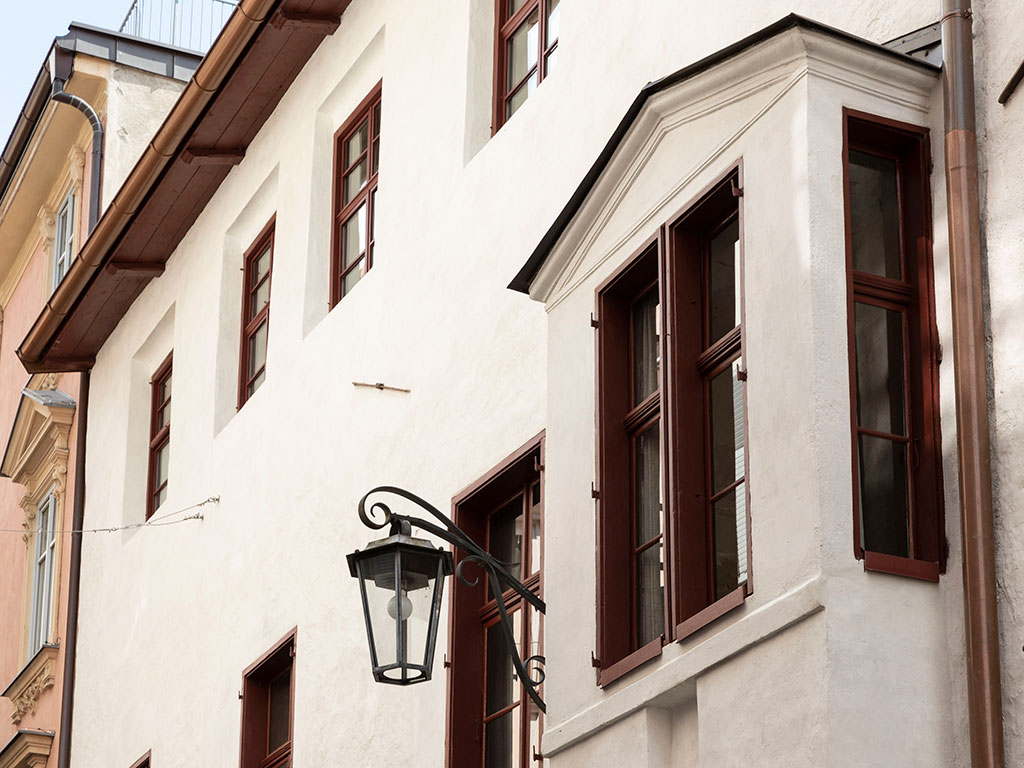
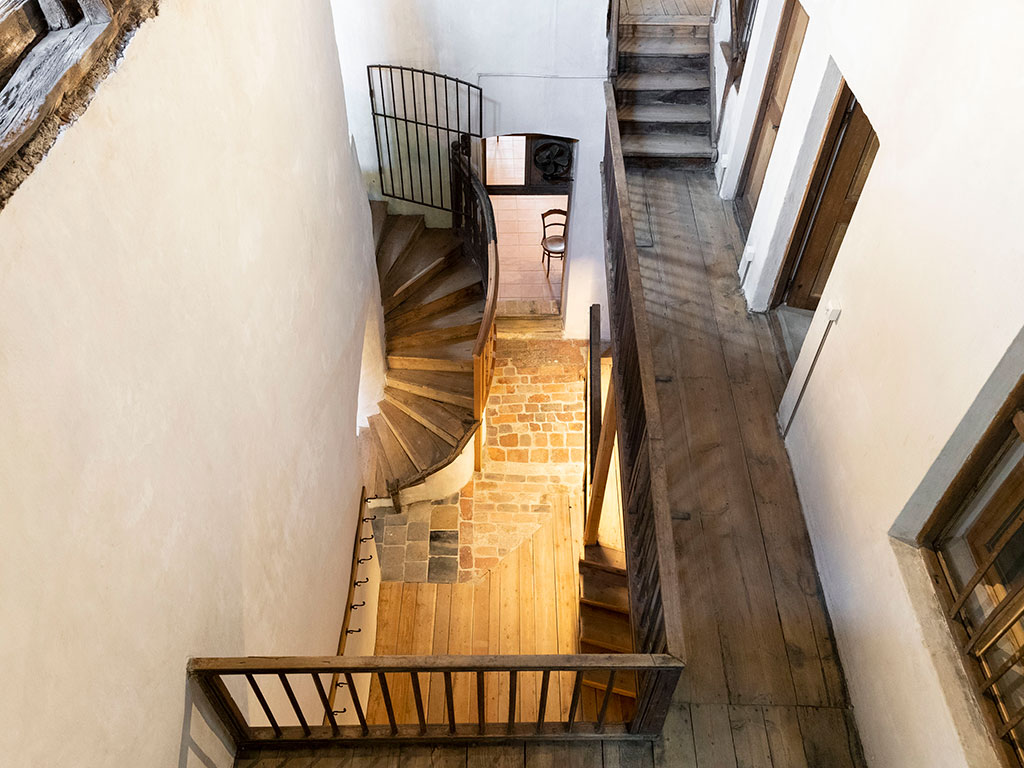
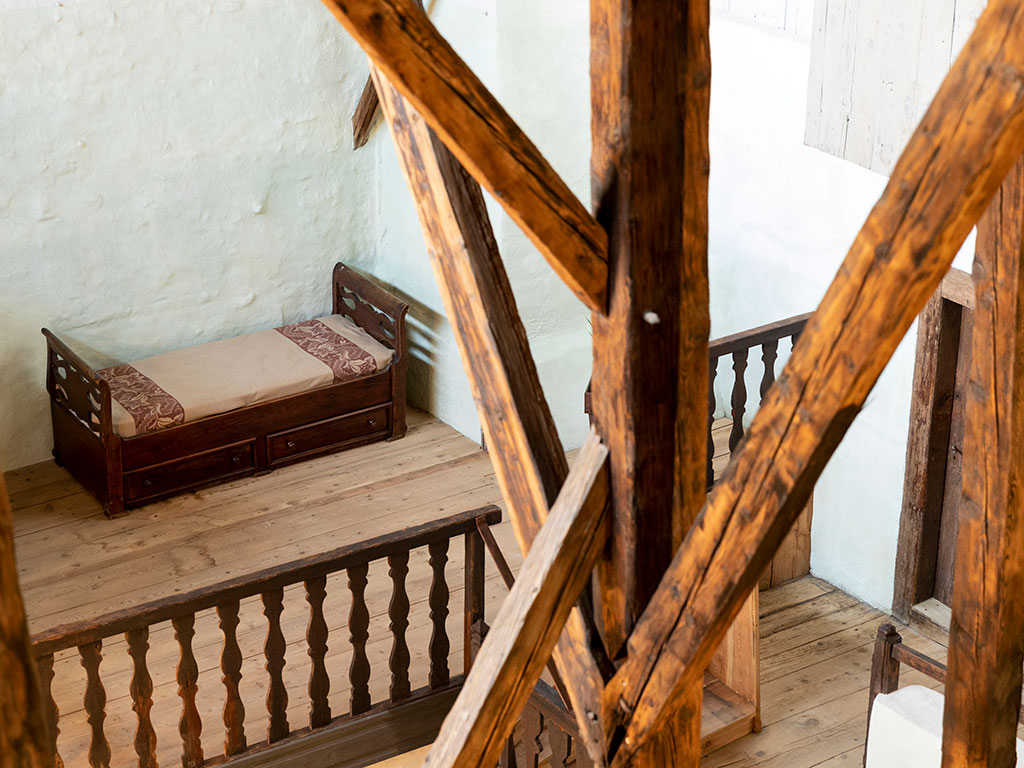
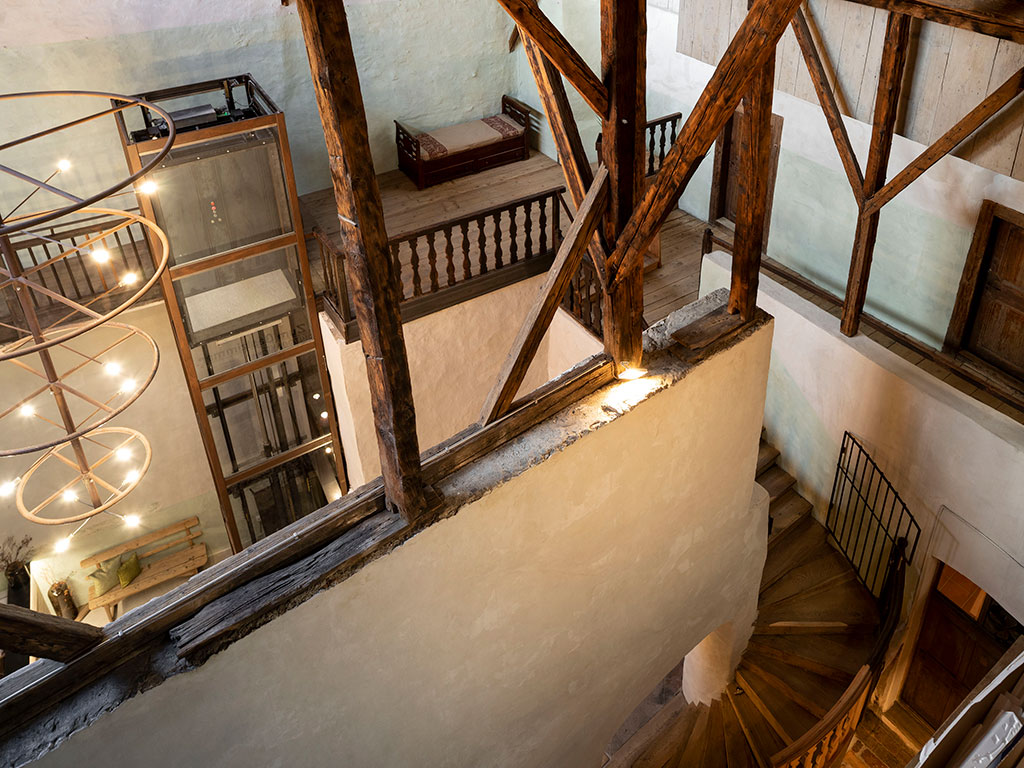
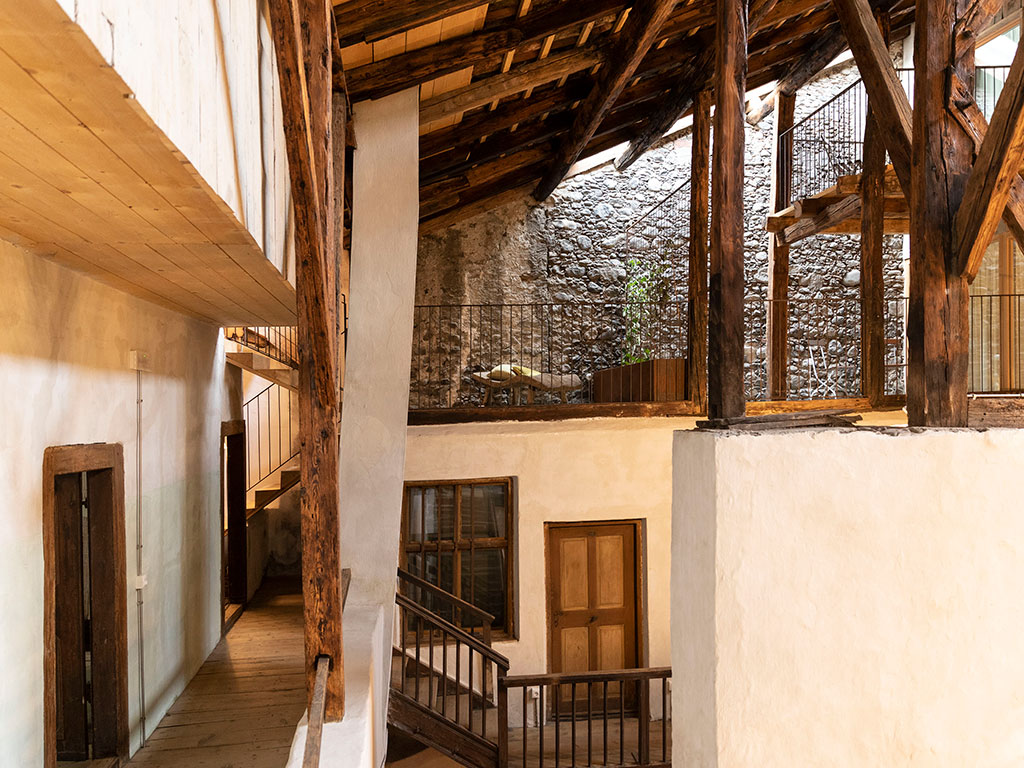
The “Rössl Bianco” begins on the first floor and extends up into the airy attic, featuring inner terraces and a magnificent exposed roof structure
From then to today
In 1745, the “Weiße Rössl” first emerges from the shadows of history as a tafferne (tavern) in the lower water arcades. Not quite 200 years later, during the Fascist era, when the old Tyrolean capital Merano had become an Italian provincial town, the “Weiße Rössl” was only allowed to be called “Cavallino Bianco.”
After the Second World War, the traditional inn was known rather awkwardly in both languages as “Cavallino Bianco – Weißes Rössl.” Since 2018, it has carried the name “Rössl Bianco” – logically bilingual, unmistakable, and a living expression of the reality of Merano.
History
How it all began
The history of “Rössl Bianco” begins in the distant Middle Ages, when the old Tyrolean capital of Merano was still surrounded by a city wall with four gates, and the arcade street served as the only shopping street running from west to east through the town.
At the front of the arcades were shops, craft businesses, and inns, while behind them, stretching all the way to the city wall, stood interconnected houses with inner courtyards, gardens, and stables. The “Stadtbach,” an ancient artificial canal that still flows behind Rössl Bianco today, supplied water and also served as a means of disposal.
In 1770, Merano had 11 inns, and our “Rössl Bianco” is considered the oldest among them. Around 1920, the well-known painter Franz Lenhard wrote:
“Walking up the arcades on the right-hand side stands the oldest house in Merano, the ‘White Horse,’ whose operation, in the hands of an experienced host and a tradition-loving architect, could become a unique attraction for Merano.”
The Rössl Bianco begins on the first floor and extends up into the airy attic, featuring inner terraces and a magnificent exposed roof structure.
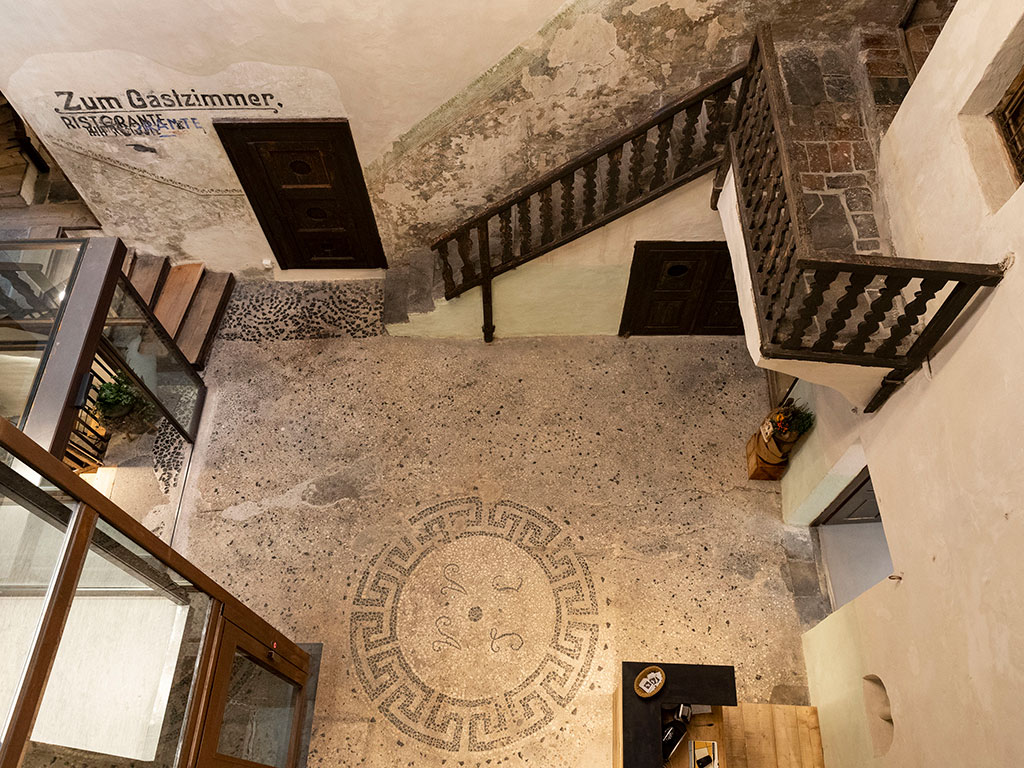
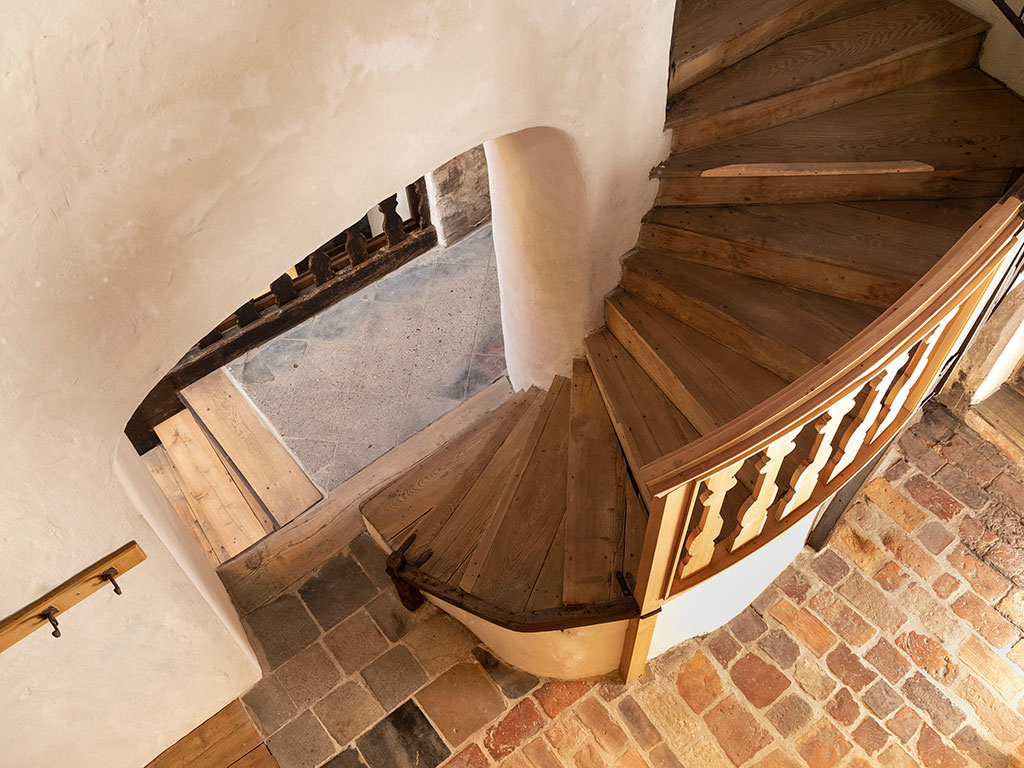
Rössl Bianco has always been an inn for ordinary people. It lacks expensive architectural elements, stone frames, or frescoes. The building materials came from the surrounding area and were brought in and installed with great effort: stone, clay bricks, lime, and wood. During the renovation starting in 2016, this was carefully respected: old beams, floorboards, clay tiles, and stones were reused, allowing the soul of the historic inn to keep breathing.
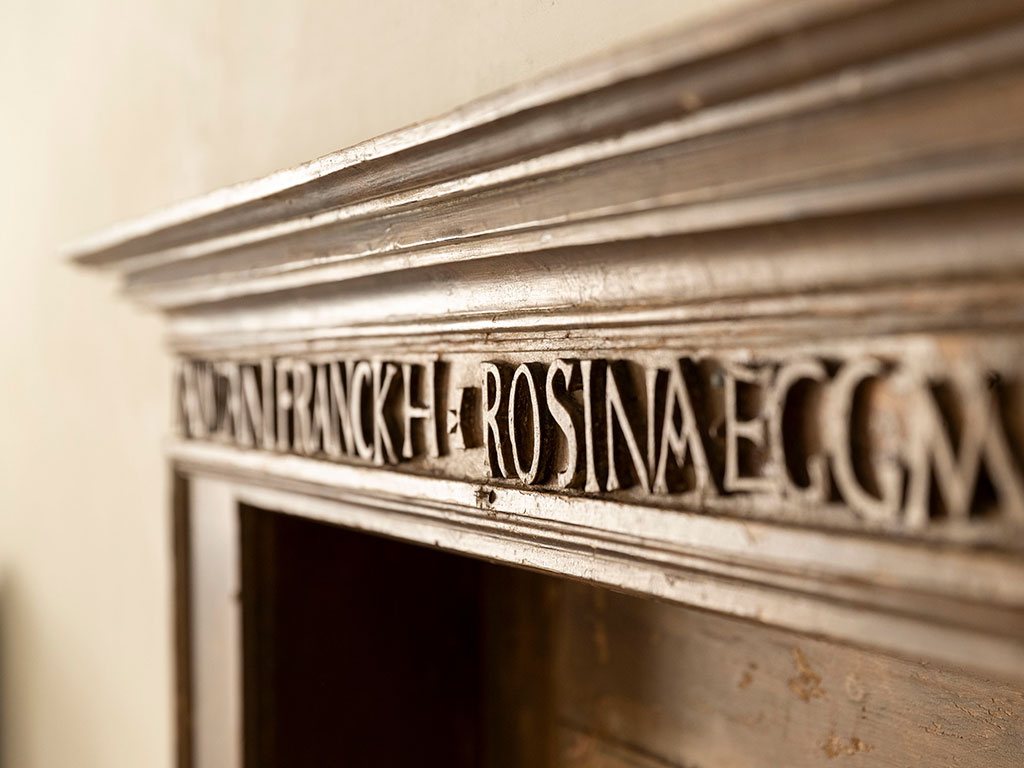
The restoration of Rössl Bianco was accompanied by architectural researchers, who identified several construction phases across the height and length of the building. The cellars facing the arcades, the ground floor, and parts of the first floor feature Romanesque masonry dating back more than 800 years. The 15th-century Gothic style is especially evident in the famous “Gothic Hall.” The 16th-century Renaissance can be seen on the second floor, in Room 1 and in the eastern exterior wall. The Baroque period, visible on the arcade side of the second floor, is expressed through stucco ceilings, a tiled stove, wide wooden floorboards, and decorative doors (1781). During the Historicist period, in the second half of the 19th century, the second-to-last major renovation took place (MDCCCLII = 1852, Room 9), affecting the south-facing lean-to roof, the bar, and the traditional dining room.
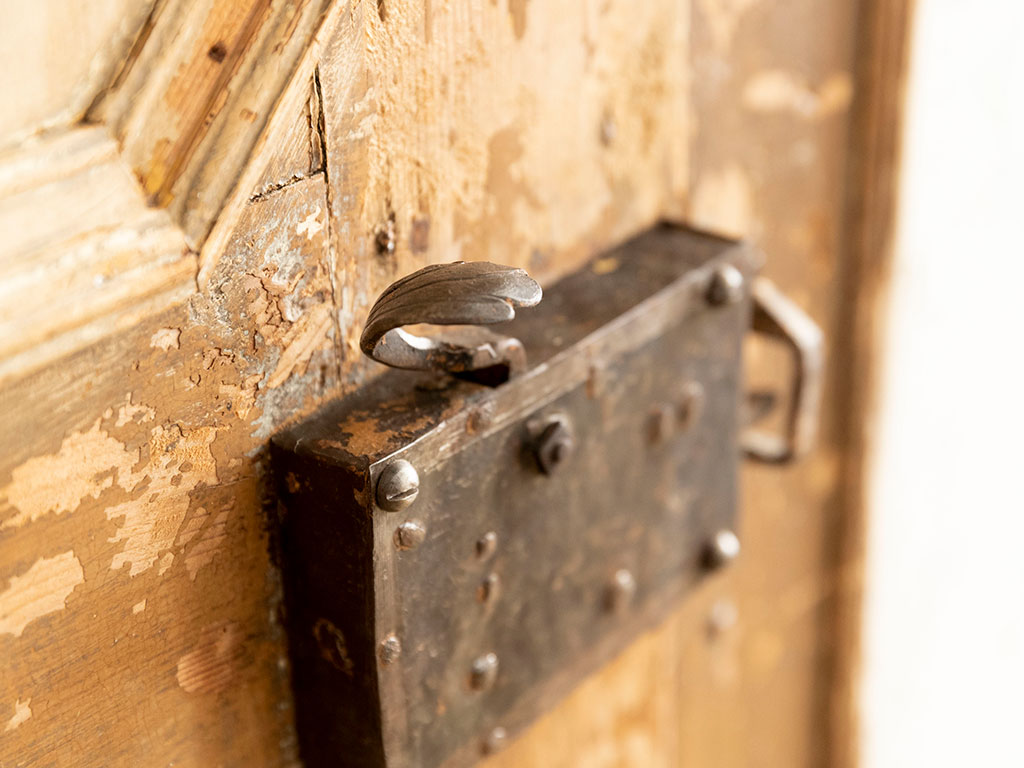
A special experience lies in the many preserved traces of former residents and guests: signs of use, wear, layers of paint, soot, and much more. An old inn as a true hard drive of history. Restoration without judgment – even an old inn stove deserves a life after renovation.
In 1974, the inn was closed. It fell into decline and never followed the tourism boom. Instead, it remained a meeting place for old Merano locals, farmers from the surrounding valleys, and military men, complete with a jukebox and a touch of sin and scandal. In 1981 it made its final public appearance as a film set (Zoderer: Das Glück beim Händewaschen, directed by Masten).
Then came a long sleeping beauty phase, serving as a refuge for pigeons and cats. In 2015, the property was sold from Haller Algund to Haller Passeier, beginning the planning and renovation phase.
In 2018, it reopened as B&B&B.
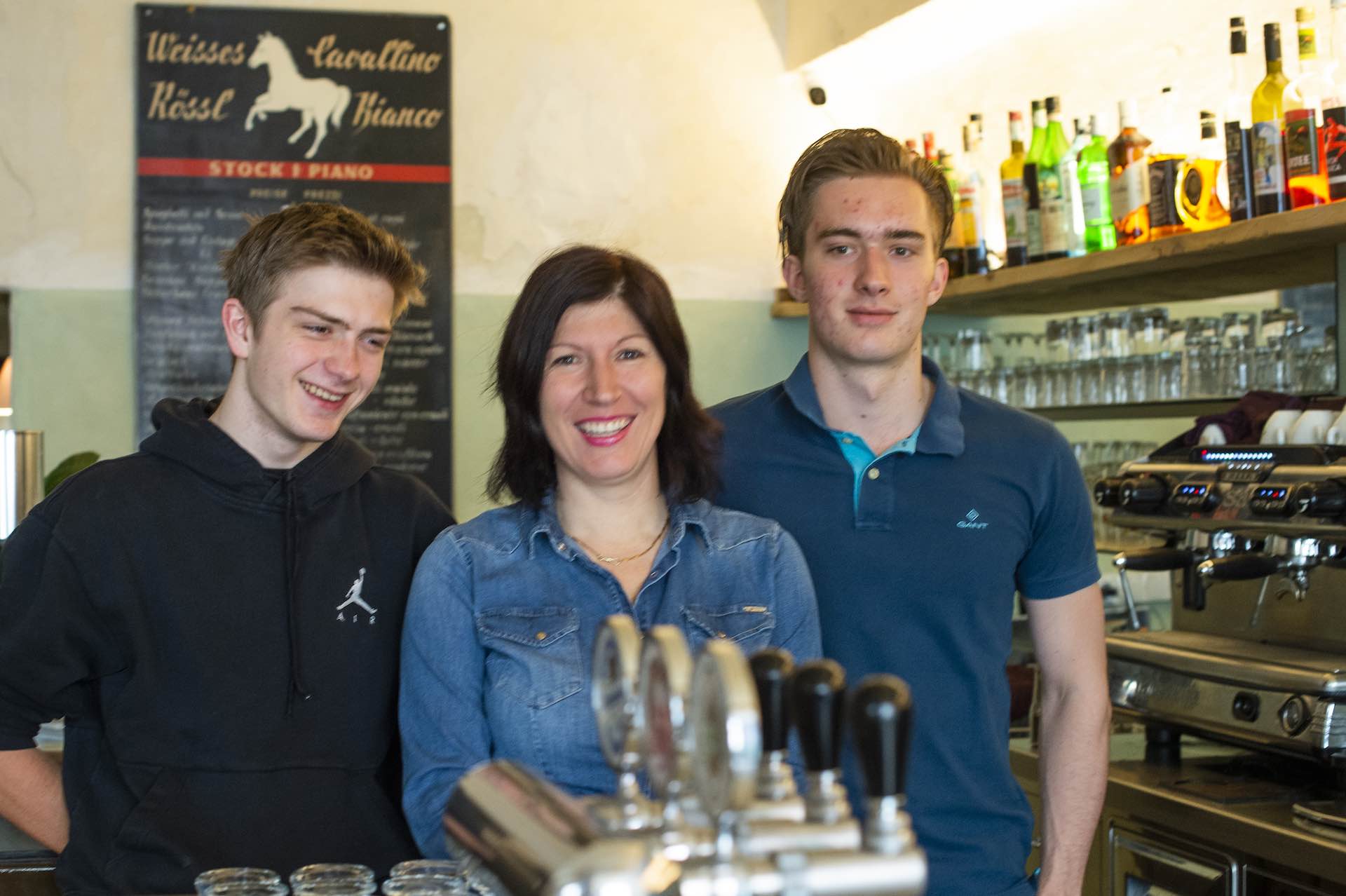
Anna and her team